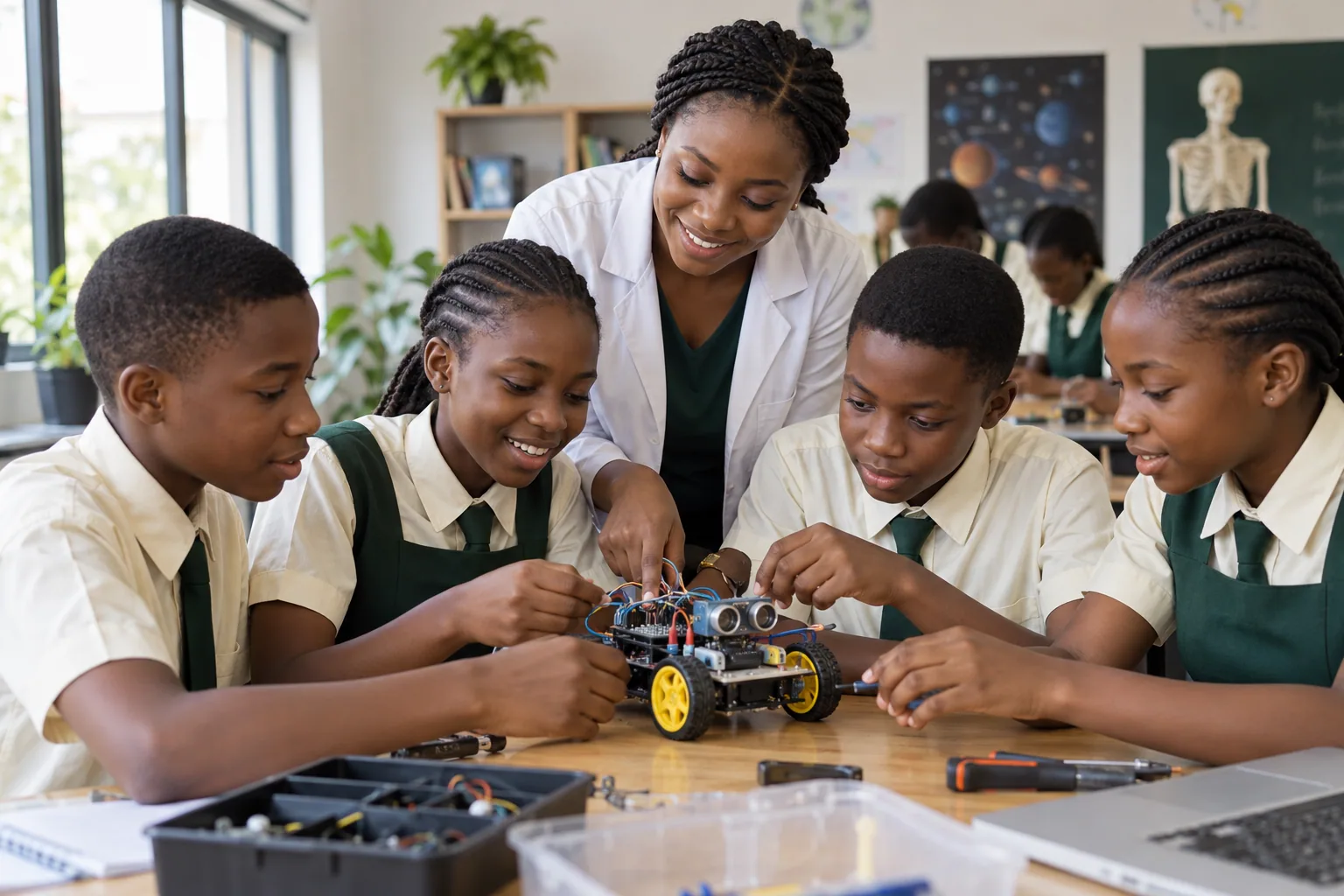
Classrooms and practical learning
Flexible classroom activities combine discussion, focused practice and age-appropriate hands-on exploration. Practical science and making activities encourage careful observation, safe use of materials and the habit of improving a first attempt.
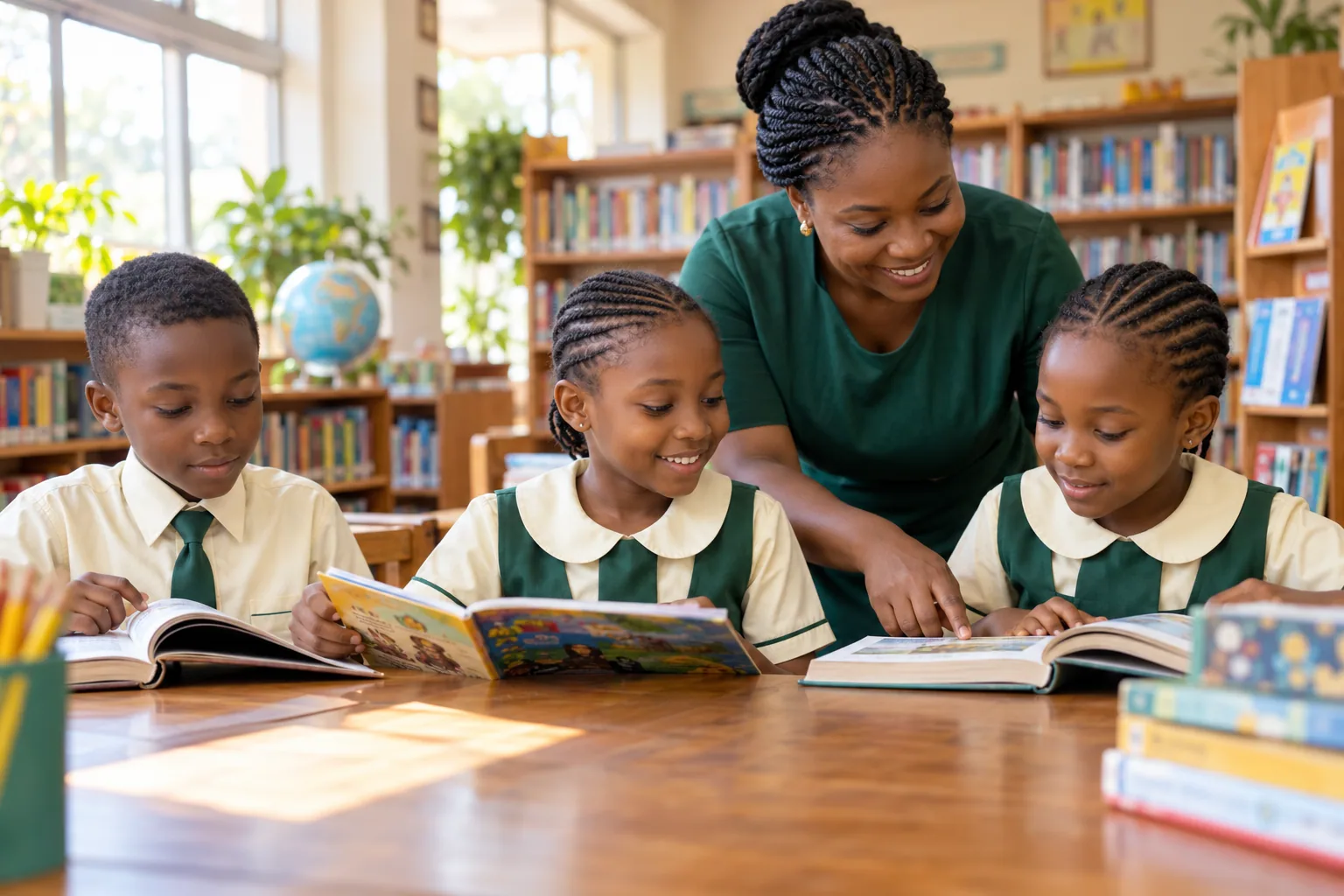
Reading spaces and the library
Books are part of the school day, not a decoration. Shared stories, independent reading and supervised borrowing give learners opportunities to discover new authors, explore information and develop a reading habit. The connected library system tracks copies and loans while keeping children's records private.
Creative and active spaces
Art, music, movement and outdoor activities give children different ways to communicate and develop confidence. Staff plan the activity, check practical needs and supervise participation. A real school should confirm the equipment and access arrangements available for each year group.
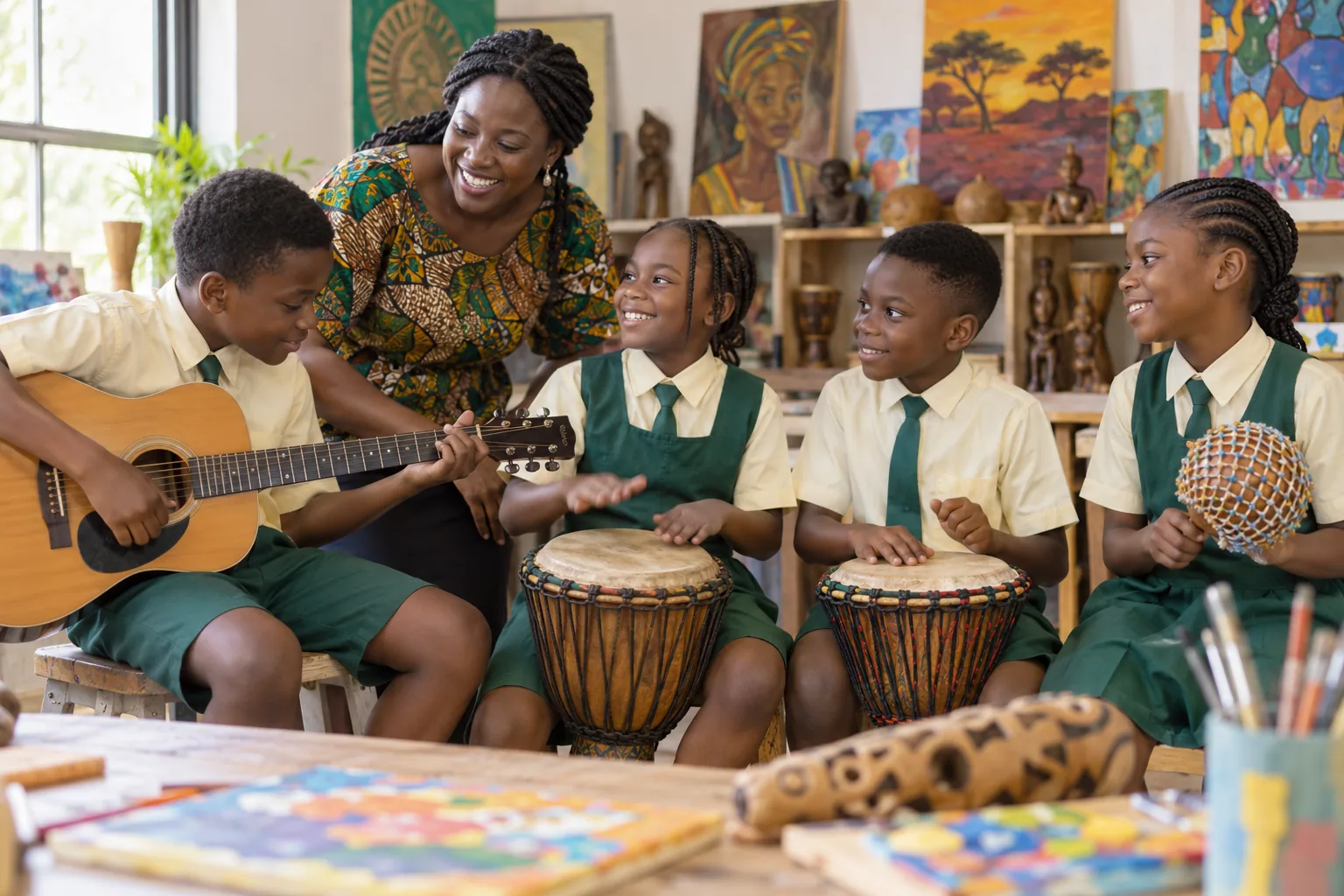
Illustrative environments
These synthetic images show design possibilities for a demonstration school. They are not evidence of a real building, equipment inventory, health service or accreditation. Visit the operating school and verify facilities before making an enrollment decision.
Speak with the school about learning, routines, available places or your family’s next steps.
Arrange a conversation